Pigment Violet 23 (PV23): Complete Specs and Buyer Guide for HP Violet 6172
Pigment Violet 23 (PV23): Complete Specs and Buyer Guide for HP Violet 6172
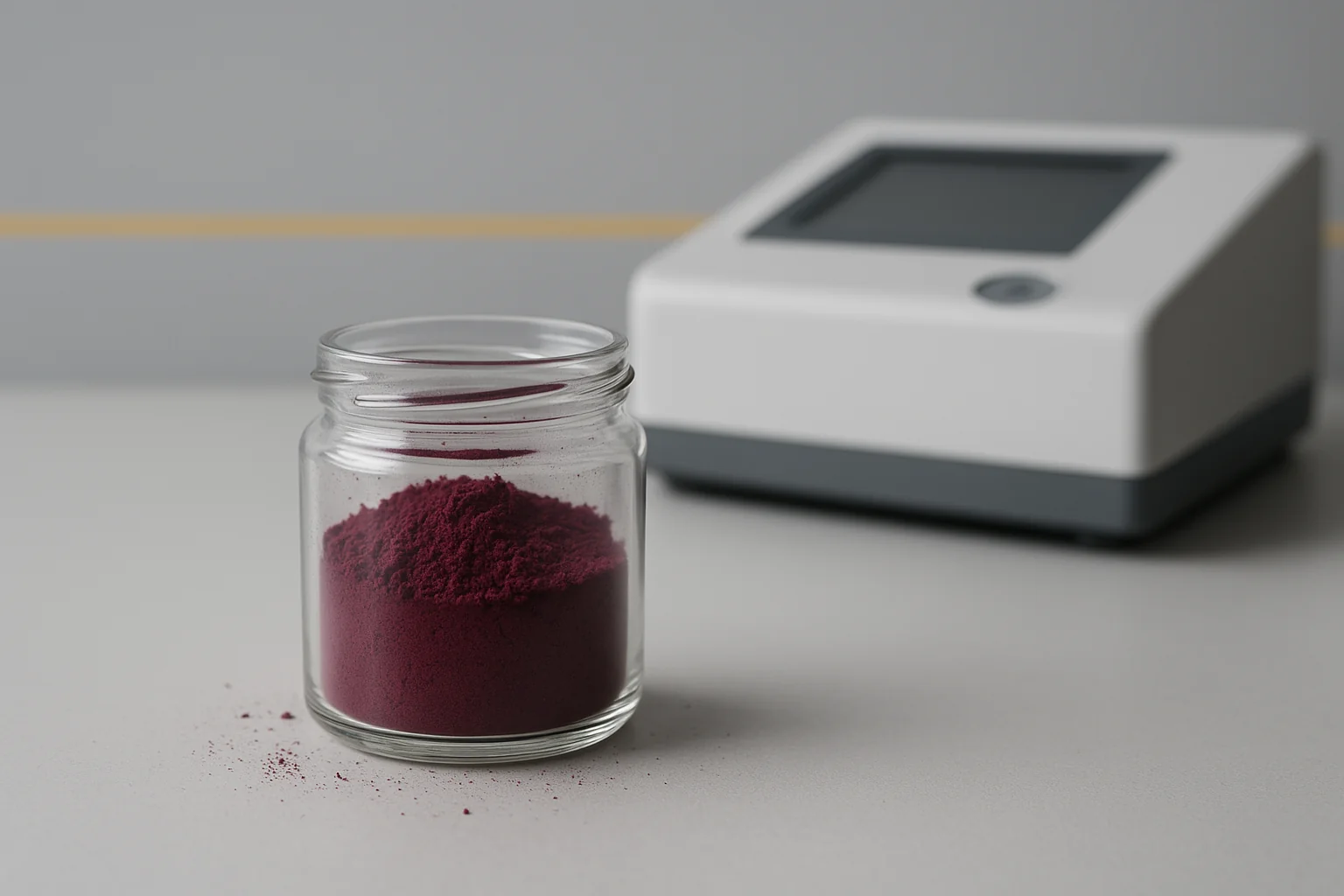
If you’re sourcing PV23 for inks, coatings, or plastics, the real work isn’t finding “a PV23.” It’s qualifying a grade that can hold shade, strength, and processing stability in your system—and documenting that performance with a clean SDS/TDS/COA package. Whether you’re a German automotive coatings formulator, a Japanese ink manufacturer, or a Brazilian masterbatch producer, PV23 qualification follows the same discipline: verify in your system, document the results, and control batch-to-batch consistency.
This guide summarizes what matters most for HP Violet 6172 (PV23) and how buyers typically validate it before switching or approving a new supplier.
What is Pigment Violet 23 (PV23)?
Pigment Violet 23 is a dioxazine violet pigment (often referenced as PV23 pigment) widely used where high color strength and strong fastness are required. You’ll also see it referenced by identifiers such as Pigment Violet 23 CAS 6358-30-1 and C.I. Constitution No. 51319.
For procurement and QC documentation, aligning on exact identifiers (C.I. name/number, CAS, and grade name) is the first step to avoiding mismatched approvals.
HP Violet 6172 at a glance (identifiers + published specs)
The following specs are published for HP Violet 6172 / PV23 on the HP Violet 6172 product page.
|
Item |
Value |
|---|---|
|
C.I. Name |
Pigment Violet 23 (PV23) |
|
Chemical class |
Dioxazine |
|
CAS No. |
6358-30-1 |
|
Chemical formula |
C34H22Cl2N4O2 |
|
Light fastness (full shade / tint) |
8 / 8 |
|
Weather resistance (full shade / tint) |
5 / 5 |
|
Heat stability |
280°C (10 min) |
|
Migration resistance (PVC) |
5 |
|
Acid resistance |
5 |
|
Alkali resistance |
5 |
|
Specific density |
1.45 ± 0.1 g/cm³ |
|
Specific surface |
85 m²/g |
|
Oil absorption |
78 ± 10 g linseed oil / 100 g pigment |
|
pH |
4.5 – 7.5 |
|
Volatile matter |
Max 1% |
|
Packaging |
25 kg/bag; 400 kg/pallet |
|
Shelf life |
5 years |
Where HP Violet 6172 fits: inks, coatings, and plastics
Honor Pigments lists HP Violet 6172 as recommended for water-based inks, water-based coatings, and industrial paints, and also includes broader compatibility across solvent-/water-based coatings and multiple polymers. For a broader view of pigment options across these segments, see our complete organic pigments catalog.
Water-based inks (pigment violet 23 for water-based inks)
Water-based systems put extra pressure on dispersion quality and stability. In practice, buyers qualifying pigment violet 23 for water-based inks often validate:
-
Dispersion stability (settling/flocculation risk under storage and shear)
-
Color development at target let-down ratios
-
Rub / abrasion resistance in the intended binder system
If your main target is water-based printing, it’s also worth reviewing the broader pigment selection context in Honor Pigments’ pigments for water-based inks category. For Korean packaging ink producers and Southeast Asian flexo printers adopting water-based systems, PV23’s fastness profile is a key differentiator in qualification.
Water-based coatings and industrial paints (pigment violet 23 for coatings)
For coatings, qualification tends to focus on appearance and durability in the full formulation. When evaluating pigment violet 23 for coatings, buyers typically focus on:
-
Shade control (masstone and tint) across batches
-
Gloss and flow impact (system-dependent)
-
Weathering and light exposure performance aligned to the end-use
Plastics (including PVC) (pigment violet 23 for plastics)
For plastics, the key questions are usually about thermal history and migration/bleed performance. When evaluating pigment violet 23 for plastics, teams usually look at:
-
Heat history tolerance at your real processing profile (temperature and residence time)
-
Migration/bleed risk in the finished article (especially in plasticized systems)
-
Color drift after processing and aging
HP Violet 6172 lists heat stability 280°C/10 min and a PVC migration resistance rating of 5 on the product page. For processors, the practical next step is confirming those outcomes at your real processing conditions (temperature profile, residence time, and additive package). Explore more pigments for plastics to compare PV23 with other high-performance violet grades.
What to verify in qualification (procurement + technical checklist)
Even with published technical data, qualification is where risks are reduced—especially when switching suppliers or approving a second source.
1) Grade identity and traceability
Confirm the following items match across PO, COA, incoming label, and internal spec:
-
C.I. name: Pigment Violet 23 (PV23)
-
CAS: 6358-30-1
-
Grade name: HP Violet 6172
-
Batch/lot ID and manufacturing traceability fields on COA
2) Color consistency and strength control
For PV23, small shifts in shade can cascade into press/paint adjustments and scrap. Typical validation steps include:
-
Masstone and tint comparison vs. an approved reference
-
Tint strength tracking (with a consistent let-down method)
-
Batch-to-batch delta monitoring in your color space method
3) Dispersion behavior in your system
“Good dispersibility” is meaningful only when it’s proven in your actual resin/vehicle.
Validate:
-
Time to reach target fineness
-
Viscosity impact at target pigment loading
-
Stability after storage (hot/cold cycles if relevant)
4) Heat and chemical resistance alignment
If your application includes higher-temperature processing or aggressive environments, verify against your internal criteria.
For reference, HP Violet 6172 publishes:
-
Heat stability: 280°C (10 min)
-
Acid resistance: 5; alkali resistance: 5
5) Migration / bleed risk (especially in PVC)
If your end-use is sensitive to migration (PVC, elastomers, certain packaging), confirm the pigment’s behavior in your exact formulation.
HP Violet 6172 lists a migration resistance in PVC rating of 5 on the product page, which is a useful starting point for screening.
⚠️ Warning: Final suitability depends on the complete formulation (polymer, plasticizers, additives, and processing). Always validate migration and stability in the finished system before approval.
Packaging, storage, and what procurement cares about
For global supply, the “hidden” risk is often practical: packaging integrity, documentation speed, and predictable replenishment. From the published details, HP Violet 6172 is supplied as powder with 25 kg/bag packaging and 400 kg per pallet guidance, with a stated 5-year shelf life under recommended storage conditions. For buyers in Japan, Korea, Germany, and Southeast Asian markets, documentation turnaround and Incoterm flexibility are often as critical as the pigment’s technical performance.
PV23 grade selection note: when to consider a different PV23 variant
PV23 can be offered in multiple grades optimized for different end-uses.
For example, Honor Pigments also lists HP Violet 6374 (Pigment Violet 23) with positioning that highlights suitability for high-loading masterbatch applications.
If your project is masterbatch-focused, it can be useful to compare PV23 grades side-by-side using the same dispersion method and let-down system. For yellow pigment selection, see also our Pigment Yellow 110 guide. For a broader plastics pigment overview, browse our pigments for plastics category. If you’re working with coatings, our pigments for coatings selection may also be relevant.
Next step: request samples + full documentation for HP Violet 6172
To move from “specs look good” to a controlled approval, request:
-
A sample for your let-down / formulation trial
-
TDS + SDS + COA (and your required test methods/limits) — Contact us for TDS/SDS
-
Pricing, MOQ, and lead time for your target Incoterm
If you share your application (ink/coating/plastic type), target shade, and processing temperature window, Honor Pigments can help confirm whether HP Violet 6172 is the best PV23 grade for your qualification plan.
Looking for Pigment Violet 23? Contact Honor Pigment for technical data sheets (TDS/SDS) and free samples. Get in touch →
Ready to qualify PV23 for your application? Request your free evaluation sample and TDS/SDS package today. Our technical team supports buyers across Germany, Japan, Korea, Brazil, and Southeast Asia with localized documentation and rapid sampling. Start your PV23 qualification →
Disclaimer: This article is for general reference only. Always verify specifications with our team and review the current full legal disclaimer, TDS and SDS before product use.